

A few years ago, most people outside nutrition research had never heard of berberine. Today it appears in conversations about blood sugar, metabolism, cholesterol and weight management, and it has even picked up the online nickname “nature’s Ozempic”. That label oversimplifies things: berberine is a different compound with its own evidence base and should be judged on it.
Unlike many wellness trends, berberine is not a newly invented ingredient. It is a naturally occurring plant compound that has been studied for decades, and a growing body of randomised trials is now helping to explain why it has attracted so much interest. The central question is a practical one: what can berberine realistically do, and where does the science look most promising?
What is berberine?
Berberine is a bioactive compound found in several plants, including species of Berberis such as barberry. Chemically it belongs to a group called isoquinoline alkaloids, and it is the yellow pigment in many of the roots and stems that contain it. Plants rich in berberine have a long history in traditional medicine, although traditional use is a reason to investigate rather than evidence in itself. The modern case for berberine rests on laboratory work and clinical trials.
Current interest centres on glucose metabolism and insulin signalling, blood lipids, body-weight regulation and gut-related mechanisms, which together make up much of what is meant by metabolic health.
Why does berberine attract so much scientific interest?
Berberine appears to interact with several metabolic pathways rather than a single target. The one most often discussed is AMPK, an enzyme that works as a cellular energy sensor. AMPK helps cells respond to changes in energy availability and influences how they use glucose and fat, so a compound that activates it offers a plausible route to effects on blood sugar and lipids. Laboratory studies suggest berberine does this.
The mechanism is interesting, but the more important question is whether these effects also appear in human studies. Activating a pathway in cells does not automatically mean weight loss or better blood markers in a person. Mechanisms help researchers understand why an effect might occur, while human trials show whether it does, how large it is and in whom. The sections below therefore rely mainly on randomised controlled trials and pooled analyses of them.
Berberine and blood sugar
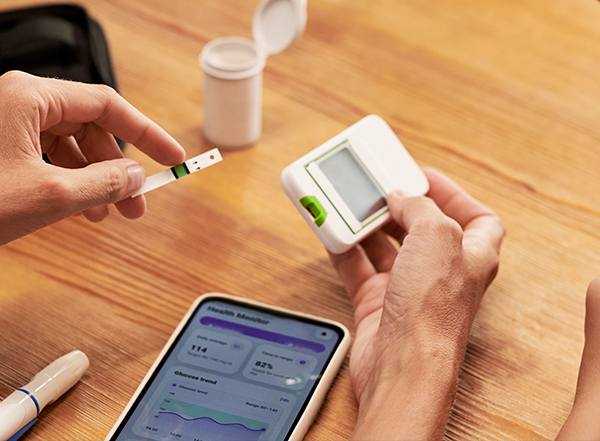
Glucose metabolism is where berberine has been studied most extensively. A 2023 systematic review and meta-analysis in The Journal of Nutrition pooled 20 placebo-controlled trials with around 1,760 participants. Berberine was associated with lower fasting glucose, post-meal glucose, fasting insulin and HOMA-IR, a commonly used estimate of insulin resistance, and HbA1c, a marker of average blood sugar over recent months. A 2024 analysis of 50 trials in type 2 diabetes, published in Frontiers in Pharmacology, pointed the same way, including improvements in HbA1c when berberine was added to glucose-lowering medication.
Taken together, these meta-analyses report modest improvements in glucose-related markers, particularly in people whose metabolic health is already impaired. The size of the effect varies with the population, the dose, the length of the study and whether berberine was taken alongside standard treatment, and the underlying trials differ considerably in design and quality. A 2025 review of placebo-controlled trials in people with features of metabolic syndrome reported an average fasting glucose reduction of about 0.5 mmol/L.
The evidence does not make berberine a replacement for medical treatment, but it does explain why it has become such an interesting complementary option in metabolic-health research.
Berberine, cholesterol and triglycerides
Blood lipids are the second area where the data look fairly consistent. That 2025 systematic review and meta-analysis covered 12 placebo-controlled trials with 889 participants and found that berberine was associated with lower triglycerides, LDL cholesterol and total cholesterol, while HDL cholesterol and blood pressure showed no significant change. The average reductions were roughly 0.37 mmol/L for triglycerides and 0.5 mmol/L for LDL cholesterol. A 2026 randomised trial in 337 adults found a similar signal on a smaller scale: after six months of 1 g daily, LDL cholesterol and apolipoprotein B were modestly lower than with placebo.
These markers matter because they are widely used to track cardiometabolic risk. Seeing glucose and lipid effects side by side is one reason berberine is often discussed as a broader metabolic-health ingredient rather than simply a blood sugar supplement.
Can berberine support weight management?
Online, berberine is often presented as a dramatic weight-loss supplement. The research points to a more measured – but still interesting – effect. A meta-analysis published in the International Journal of Obesity at the end of 2025 found that, across pooled randomised trials, berberine was associated with an average body-weight reduction of under 1 kg (0.88 kg), a BMI reduction of about 0.5 kg/m² and a waist-circumference reduction of roughly 1.3 cm. The metabolic syndrome review reported a larger waist change of about 3 cm across four trials. These are modest effects.
Even modest changes become more interesting when they appear alongside improvements in other metabolic markers. Berberine may support weight-management efforts, but it makes more sense as part of a structured nutrition and activity plan than as a standalone solution.
What about the gut microbiome?
Berberine is absorbed poorly by mouth, so researchers have asked whether the microbiome plays a part in its effects. Gut bacteria can also convert berberine into other forms that the body may absorb more easily. A 2026 systematic review in Nutrients examined seven randomised trials and found that six reported significant shifts in microbial composition, in several cases alongside improvements in fasting glucose, lipids and inflammatory markers.
This is a developing field, and the review is cautious: all the trials were conducted in China, the changes were not uniformly favourable, and the authors describe the findings as hypothesis-generating. The microbiome may be one piece of the berberine puzzle, but researchers are still working out exactly how important that piece is.
Why berberine HCl?
Berberine HCl, or berberine hydrochloride, is a commonly used supplemental form of berberine. There is no strong comparative evidence that it is superior to other forms, so its appeal is mainly practical: it is a purified, standardised form, which makes the amount in each capsule easy to define.

HAYA LABS Berberine HCL 400 mg
HAYA LABS Berberine HCL 400 mg / 60 Vcaps provides 400 mg of berberine HCl per serving (one capsule) in a convenient vegetarian capsule, with 60 servings per container. For people who want to make berberine part of their daily routine, it offers a simple, clearly dosed format for including this well-studied plant-derived compound in a broader metabolic-health approach.
Clinical trials have used a wide range of daily amounts, however, so research findings should not be interpreted as a prediction of what any individual supplement or dose will achieve.
When does berberine make the most sense?
Berberine becomes more interesting when it is viewed as one part of the picture rather than the entire picture. The markers it appears to influence are also shaped every day by what we eat, how much we move and how well we sleep.
That is why the routine around the capsule matters. Balanced meals with enough protein and plenty of fibre-rich foods, regular physical activity, resistance training, a healthy body weight and consistent sleep all act on the same markers.
So, is berberine worth the attention?
Berberine has earned its place among the most interesting plant-derived compounds being studied for metabolic health. Research now connects it with several important areas of metabolic health, from glucose and insulin-related markers to blood lipids and, more modestly, body weight and waist circumference. The effects are not identical for everyone, but the growing clinical evidence explains why interest in berberine continues to rise.
For those who want to include it in their routine, HAYA LABS Berberine HCL 400 mg / 60 Vcaps offers a simple, clearly dosed format that fits easily alongside nutrition, regular movement and the other habits that support metabolic health.
Frequently asked questions
What is berberine used for?
Berberine is a plant-derived compound taken as a supplement, mainly in the context of metabolic health. Research has focused on blood glucose and insulin-related markers, blood lipids such as LDL cholesterol and triglycerides, and, to a smaller extent, body weight and waist circumference. Interest in its relationship with the gut microbiome is also growing.
Does berberine help with weight loss?
Research suggests modest effects. Pooled trials have reported average reductions of under 1 kg in body weight, along with small reductions in BMI and waist circumference. Berberine is not a standalone weight-loss solution and makes most sense alongside nutrition and activity habits.
Can berberine support healthy blood sugar levels?
Human research has reported improvements in several glucose-related markers, including fasting glucose, HbA1c and HOMA-IR, particularly in people with impaired metabolic health. Anyone using glucose-lowering medication should speak with a doctor before taking berberine, because the effects could add up.
What is Berberine HCL?
Berberine HCl, or berberine hydrochloride, is a commonly used supplemental form of berberine. It is a purified salt form that allows a defined amount of berberine to be provided in each capsule.
When should you take berberine?
There is no universal protocol. For HAYA LABS Berberine HCL 400 mg, follow the instructions on the product label, which recommends one capsule once a day, and do not exceed the stated dose. If you take medication or have a medical condition, seek professional guidance first.
Sincerely,
Haya Labs
Sources
Scientific Sources
Liu D, Zhao H, Zhang Y, Hu J, Xu H. Efficacy and safety of berberine on the components of metabolic syndrome: a systematic review and meta-analysis of randomized placebo-controlled trials. Frontiers in Pharmacology. 2025;16:1572197. https://doi.org/10.3389/fphar.2025.1572197
Zhao JV, Huang X, Zhang J, Chan YH, Tse HF, Blais JE. Overall and sex-specific effect of berberine on glycemic and insulin-related traits: a systematic review and meta-analysis of randomized controlled trials. The Journal of Nutrition. 2023. https://doi.org/10.1016/j.tjnut.2023.08.016
Wang J, Bi C, Xi H, Wei F. Effects of administering berberine alone or in combination on type 2 diabetes mellitus: a systematic review and meta-analysis. Frontiers in Pharmacology. 2024;15:1455534. https://doi.org/10.3389/fphar.2024.1455534
The effect of berberine on obesity indices: a systematic review and meta-analysis. International Journal of Obesity. 2026;50(1):53–73. https://doi.org/10.1038/s41366-025-01943-x (PubMed: https://pubmed.ncbi.nlm.nih.gov/41310257/)
Lei L, et al.; BRAVO Collaborative Group. Berberine and adiposity in diabetes-free individuals with obesity and MASLD: a randomized clinical trial. JAMA Network Open. 2026;9(1):e2554152. PubMed: https://pubmed.ncbi.nlm.nih.gov/41543854/
Candrea A-R, Gavrilaș LI, Frumuzachi O, Mocan A, Babotă M, Crișan G. The integrative role of berberine in gut microbiota modulation and cardiometabolic outcomes: a systematic review of randomised clinical trials. Nutrients. 2026;18(12):1858. https://doi.org/10.3390/nu18121858
Product Information
HAYA LABS Berberine HCL 400 mg / 60 Vcaps, official product page: https://www.hayalabs.com/en/2126-HAYA-LABS-Berberine-HCL-400mg--60-Vcaps.html
.